mammal · Carnivora · Canidae
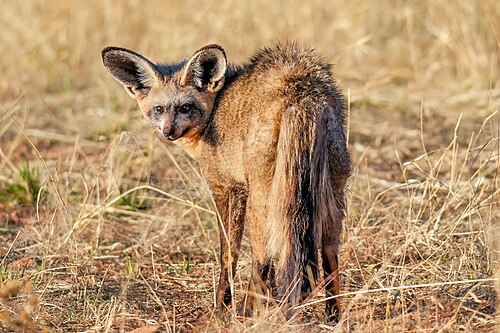
Bat-eared Fox
Otocyon megalotis (Desmarest, 1822) — also called Big-eared Fox, Bat-ear Fox. Occurrence records of the Bat-eared Fox are shared on GBIF from around 17 parks and reserves in the directory, most of all Kgalagadi Transfrontier Park (26 records), in 5 provinces.
IUCN: Least concernCanidae
17reserves with records
175records around them
5provinces
LCIUCN category
Where it is recorded
| Reserve | Province | Records |
|---|---|---|
| Kgalagadi Transfrontier ParkTransfrontier area | NC Northern Cape | 26 |
| Addo Elephant National ParkNational park | EC Eastern Cape | 25 |
| Greater Mapungubwe Transfrontier Conservation AreaTransfrontier area | LP Limpopo | 24 |
| Nyati ConcessionProtected area | EC Eastern Cape | 20 |
| Mountain Zebra National ParkNational park | EC Eastern Cape | 18 |
| Marrick Private Game ReservePrivate game reserve | NC Northern Cape | 11 |
| Karoo National ParkNational park | WC Western Cape | 10 |
| Baviaanskloof Mega ReserveProtected area | EC Eastern Cape | 9 |
| Garden Route Safari CampPrivate game reserve | WC Western Cape | 9 |
| Postberg Nature ReserveNature reserve | WC Western Cape | 5 |
| Tswalu Kalahari ReserveGame reserve | NC Northern Cape | 4 |
| Mapungubwe National ParkNational park | LP Limpopo | 3 |
| Samara Karoo ReserveNature reserve | EC Eastern Cape | 3 |
| De Hoop Nature ReserveNature reserve | WC Western Cape | 2 |
| Mokala National ParkNational park | NC Northern Cape | 2 |
| SwartkransProtected heritage site | GP Gauteng | 2 |
| Boland Mountain ComplexProtected area | WC Western Cape | 2 |
More of the Canidae family
Source: GBIF.org occurrence records within the radius of each reserve's point; taxonomy and IUCN category from the GBIF backbone; photo from Wikimedia Commons, credit on the picture. Records near a reserve do not prove the species lives inside it.