mammal · Carnivora · Canidae
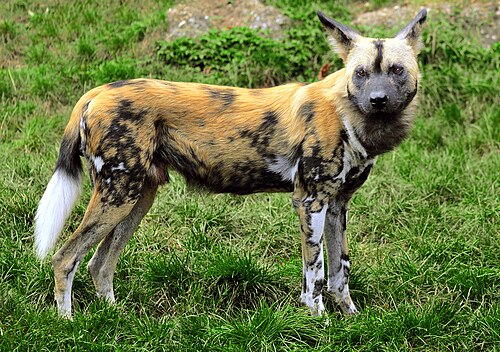
African Wild Dog
Lycaon pictus (Temminck, 1820) — also called Painted Hunting Dog, African hunting dog. Occurrence records of the African Wild Dog are shared on GBIF from around 19 parks and reserves in the directory, most of all Kruger National Park (160 records), in 5 provinces.
IUCN: EndangeredCanidae
19reserves with records
270records around them
5provinces
ENIUCN category
Where it is recorded
| Reserve | Province | Records |
|---|---|---|
| Kruger National ParkNational park | LP Limpopo | 160 |
| Corridor Game ReserveGame reserve | KZN KwaZulu-Natal | 14 |
| Tswalu Kalahari ReserveGame reserve | NC Northern Cape | 14 |
| uMkhuze Game ReserveGame reserve | KZN KwaZulu-Natal | 12 |
| Lion Sands Game ReservePrivate game reserve | MP Mpumalanga | 12 |
| Timbavati Game ReserveGame reserve | MP Mpumalanga | 9 |
| Idube Game ReservePrivate game reserve | MP Mpumalanga | 8 |
| Pilanesberg National ParkGame reserve | NW North West | 6 |
| Thornybush Game ReserveGame reserve | LP Limpopo | 6 |
| Londolozi Game ReservePrivate game reserve | MP Mpumalanga | 6 |
| Mabula Game ReserveProtected area | LP Limpopo | 5 |
| Hluhluwe–iMfolozi ParkProtected area | KZN KwaZulu-Natal | 3 |
| Mala Mala Game ReserveGame reserve | MP Mpumalanga | 3 |
| Zimanga Private Game ReserveGame reserve | KZN KwaZulu-Natal | 2 |
| Waterberg BiosphereBiosphere reserve | LP Limpopo | 2 |
| El Dorado PrivaatnatuurreserweNature reserve | LP Limpopo | 2 |
| Pilanesberg Private LodgeNature reserve | NW North West | 2 |
| Klaserie Game ReserveGame reserve | MP Mpumalanga | 2 |
| Umbabat Game ReserveNature reserve | MP Mpumalanga | 2 |
More of the Canidae family
Source: GBIF.org occurrence records within the radius of each reserve's point; taxonomy and IUCN category from the GBIF backbone; photo from Wikimedia Commons, credit on the picture. Records near a reserve do not prove the species lives inside it.