bird · Coraciiformes · Meropidae
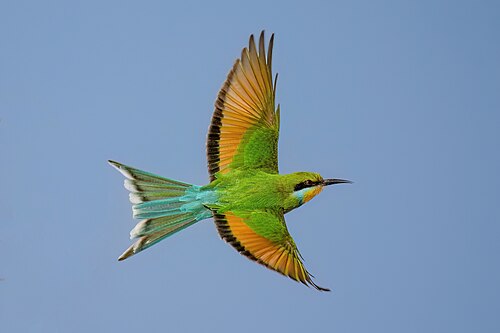
Swallow-tailed Bee-eater
Merops hirundineus A.A.H.Lichtenstein, 1793 — also called STBE, swallow-tailed bee eater. Occurrence records of the Swallow-tailed Bee-eater are shared on GBIF from around 17 parks and reserves in the directory, most of all Kgalagadi Transfrontier Park (736 records), in 3 provinces.
IUCN: Least concernMeropidae
17reserves with records
2 086records around them
3provinces
LCIUCN category
Where it is recorded
| Reserve | Province | Records |
|---|---|---|
| Kgalagadi Transfrontier ParkTransfrontier area | NC Northern Cape | 736 |
| Tswalu Kalahari ReserveGame reserve | NC Northern Cape | 540 |
| Augrabies Falls National ParkNational park | NC Northern Cape | 372 |
| Rooipoort Nature ReserveNature reserve | NC Northern Cape | 177 |
| Marrick Private Game ReservePrivate game reserve | NC Northern Cape | 113 |
| Mokala National ParkNational park | NC Northern Cape | 92 |
| Gamsberg Nature ReserveProtected area | NC Northern Cape | 12 |
| ǀAi-ǀAis/Richtersveld Transfrontier ParkTransfrontier area | NC Northern Cape | 8 |
| Blouberg PrivaatnatuurreserweNature reserve | LP Limpopo | 7 |
| !Khamab Kalahari ReserveGame reserve | NW North West | 6 |
| The Koppie Nature ReserveNature reserve | NC Northern Cape | 5 |
| Blouberg Nature ReserveProtected area | LP Limpopo | 5 |
| Billy Duvenhage Nature ReserveNature reserve | NC Northern Cape | 3 |
| Spitskop NatuurtuinNature reserve | NC Northern Cape | 3 |
| Mattanu Private Game ReservePrivate game reserve | NC Northern Cape | 3 |
| Austin Roberts PrivaatnatuurreserweNature reserve | LP Limpopo | 2 |
| El Dorado PrivaatnatuurreserweNature reserve | LP Limpopo | 2 |
By province
- Northern Cape
- 12 reserves
- Limpopo
- 4 reserves
- North West
- 1 reserve
Taxonomy
- Class
- Aves
- Order
- Coraciiformes
- Family
- Meropidae
- Scientific name
- Merops hirundineus
- GBIF taxon
- 2475434
- Wikidata
- Q576802
More of the Meropidae family
Source: GBIF.org occurrence records within the radius of each reserve's point; taxonomy and IUCN category from the GBIF backbone; photo from Wikimedia Commons, credit on the picture. Records near a reserve do not prove the species lives inside it.