bird · Passeriformes · Alaudidae
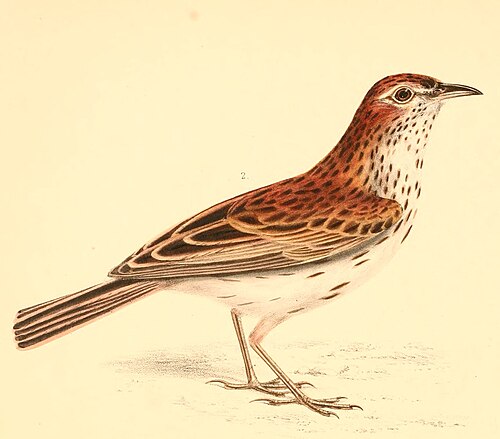
Karoo Lark
Calendulauda albescens (Lafresnaye, 1839) — also called KALA, Karroo Lark. Occurrence records of the Karoo Lark are shared on GBIF from around 19 parks and reserves in the directory, most of all West Coast Fossil Park (206 records), in 2 provinces.
IUCN: Least concernAlaudidae
19reserves with records
647records around them
2provinces
LCIUCN category
Where it is recorded
| Reserve | Province | Records |
|---|---|---|
| West Coast Fossil ParkProtected heritage site | WC Western Cape | 206 |
| Rocherpan Marine Protected AreaMarine protected area | WC Western Cape | 112 |
| Matjiesrivier Nature ReserveProtected area | WC Western Cape | 91 |
| Postberg Nature ReserveNature reserve | WC Western Cape | 48 |
| Paternoster MiddenProtected heritage site | WC Western Cape | 46 |
| Goegap Nature ReserveNature reserve | NC Northern Cape | 43 |
| Lutzville Conservation AreaNature reserve | WC Western Cape | 40 |
| Akkerendam Nature ReserveNature reserve | NC Northern Cape | 15 |
| Cape Columbine Nature ReserveNature reserve | WC Western Cape | 7 |
| Hopefield Private Nature ReservePrivate game reserve | WC Western Cape | 7 |
| Drie Kuilen Private Nature ReserveNature reserve | WC Western Cape | 6 |
| Rocherpan Nature ReserveNature reserve | WC Western Cape | 6 |
| Soopjeshoogte Private Nature ReserveNature reserve | WC Western Cape | 4 |
| Jutten Island Marine Protected AreaMarine protected area | WC Western Cape | 4 |
| Namaqua National ParkNational park | NC Northern Cape | 3 |
| Namaqua National Park Marine Protected AreaMarine protected area | NC Northern Cape | 3 |
| SAS Saldanha Nature ReserveNature reserve | WC Western Cape | 2 |
| Anysberg Nature ReserveProtected area | WC Western Cape | 2 |
| Malgas Island Marine Protected AreaMarine protected area | WC Western Cape | 2 |
By province
- Western Cape
- 15 reserves
- Northern Cape
- 4 reserves
Taxonomy
- Class
- Aves
- Order
- Passeriformes
- Family
- Alaudidae
- Scientific name
- Calendulauda albescens
- GBIF taxon
- 7340931
- Wikidata
- Q27075410
Source: GBIF.org occurrence records within the radius of each reserve's point; taxonomy and IUCN category from the GBIF backbone; photo from Wikimedia Commons, credit on the picture. Records near a reserve do not prove the species lives inside it.