mammal · Lagomorpha · Leporidae
Hewitt's Red Rock Hare
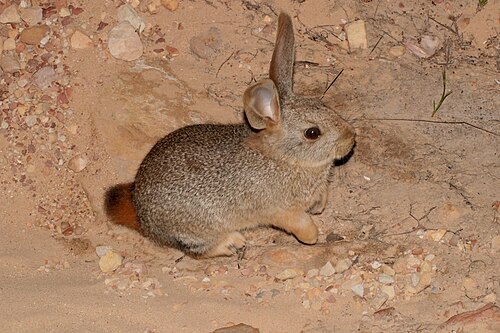
Pronolagus saundersiae Hewitt, 1927 — also called Hewitt’s Red Rock Hare, Hewitt’s Red Rock Rabbit, Cape Red Rockrabbit. Occurrence records of the Hewitt's Red Rock Hare are shared on GBIF from around 18 parks and reserves in the directory, most of all Hottentots-Holland (32 records), in 3 provinces.
IUCN: Least concernLeporidae
18reserves with records
118records around them
3provinces
LCIUCN category
Where it is recorded
| Reserve | Province | Records |
|---|---|---|
| Hottentots-HollandProtected area | WC Western Cape | 32 |
| Boland Mountain ComplexProtected area | WC Western Cape | 18 |
| Cederberg Wilderness AreaProtected area | WC Western Cape | 13 |
| CederbergProtected area | WC Western Cape | 13 |
| Kogelberg Nature ReserveProtected area | WC Western Cape | 7 |
| Hottentots Holland Nature ReserveForest reserve | WC Western Cape | 6 |
| Stony Point Nature ReserveNature reserve | WC Western Cape | 3 |
| Ceres Nature ReserveNature reserve | WC Western Cape | 3 |
| Monte Rochelle Nature ReserveNature reserve | WC Western Cape | 3 |
| Stony Point Penguin ColonyNature reserve | WC Western Cape | 3 |
| Betty's Bay Marine Protected AreaMarine protected area | WC Western Cape | 3 |
| Mountain Zebra National ParkNational park | EC Eastern Cape | 2 |
| Waterval PrivateNature reserve | WC Western Cape | 2 |
| Assegaaibosch Nature ReserveProtected area | WC Western Cape | 2 |
| Fernkloof Nature ReserveNature reserve | WC Western Cape | 2 |
| Jonkershoek Nature ReserveNature reserve | WC Western Cape | 2 |
| Golden Gate Highlands National ParkNational park | FS Free State | 2 |
| Jock's BayNature reserve | WC Western Cape | 2 |
More of the Leporidae family
Source: GBIF.org occurrence records within the radius of each reserve's point; taxonomy and IUCN category from the GBIF backbone; photo from Wikimedia Commons, credit on the picture. Records near a reserve do not prove the species lives inside it.