- Parkveld
- Wildlife
- Alcedinidae
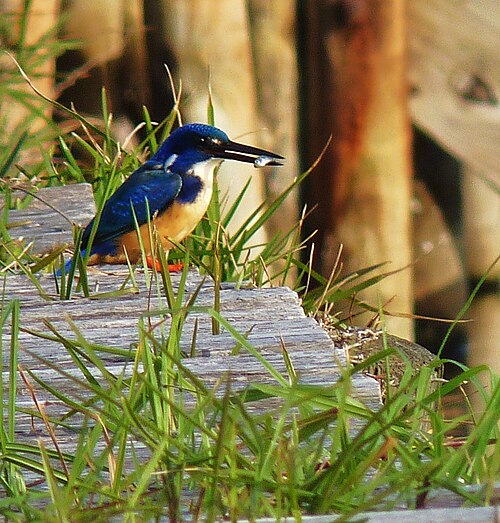
- Half-collared Kingfisher
bird · Coraciiformes · Alcedinidae
Half-collared Kingfisher
Alcedo semitorquata Swainson, 1823 — also called HCKI. Occurrence records of the Half-collared Kingfisher are shared on GBIF from around 18 parks and reserves in the directory, most of all Wilderness National Park (185 records), in 6 provinces.
IUCN: Least concernAlcedinidae
18reserves with records
493records around them
6provinces
LCIUCN category
Where it is recorded
| Reserve | Province | Records |
|---|---|---|
| Wilderness National ParkNational park | WC Western Cape | 185 |
| George Wildlife ParkWildlife sanctuary | WC Western Cape | 62 |
| Keurboomsrivier NatuurreservaatNature reserve | WC Western Cape | 52 |
| Nahoon Estuary Nature ReserveNature reserve | EC Eastern Cape | 48 |
| Dassie TrailNature reserve | EC Eastern Cape | 47 |
| Pipeline Coastal ParkNature reserve | KZN KwaZulu-Natal | 38 |
| Loskop Dam Nature ReserveNature reserve | MP Mpumalanga | 26 |
| Kwelera Nature ReserveNature reserve | EC Eastern Cape | 11 |
| Amathole Marine Protected AreaMarine protected area | EC Eastern Cape | 4 |
| ASSEGAAI TRAILSNature reserve | EC Eastern Cape | 3 |
| Plumari Private ReservePrivate game reserve | GP Gauteng | 3 |
| Mac-Mac Forest Nature ReserveForest reserve | MP Mpumalanga | 2 |
| Waters Meeting Nature ReserveNature reserve | EC Eastern Cape | 2 |
| Hluleka Nature ReserveProtected area | EC Eastern Cape | 2 |
| Hluleka Marine Protected AreaMarine protected area | EC Eastern Cape | 2 |
| Coastal Forest ReserveForest reserve | KZN KwaZulu-Natal | 2 |
| Ubizane Wildlife ReserveNature reserve | KZN KwaZulu-Natal | 2 |
| Kgaswane Nature Reserve RustenburgNature reserve | NW North West | 2 |
By province
- Eastern Cape
- 8 reserves
- Western Cape
- 3 reserves
- KwaZulu-Natal
- 3 reserves
- Mpumalanga
- 2 reserves
- Gauteng
- 1 reserve
- North West
- 1 reserve
Taxonomy
- Class
- Aves
- Order
- Coraciiformes
- Family
- Alcedinidae
- Scientific name
- Alcedo semitorquata
- GBIF taxon
- 2475520
- Wikidata
- Q1058311
Source: GBIF.org occurrence records within the radius of each reserve's point; taxonomy and IUCN category from the GBIF backbone; photo from Wikimedia Commons, credit on the picture. Records near a reserve do not prove the species lives inside it.