bird · Passeriformes · Promeropidae
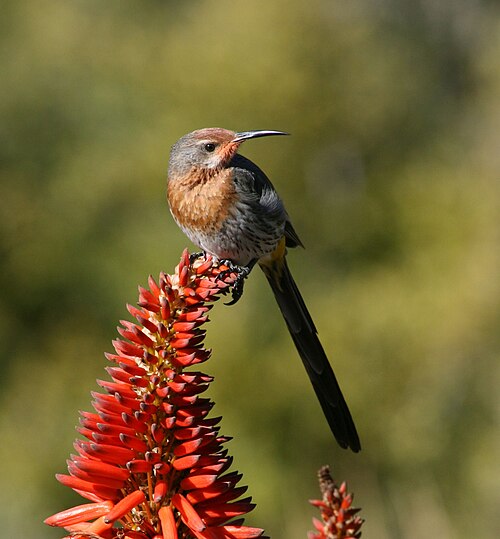
Gurney's Sugarbird
Promerops gurneyi J.Verreaux, 1871 — also called GUSU, Gurney's Sugar-bird. Occurrence records of the Gurney's Sugarbird are shared on GBIF from around 16 parks and reserves in the directory, most of all UKhahlamba / Drakensberg Park (1 158 records), in 5 provinces.
IUCN: Near threatened
16reserves with records
2 064records around them
5provinces
NTIUCN category
Where it is recorded
| Reserve | Province | Records |
|---|---|---|
| UKhahlamba / Drakensberg ParkProtected area | KZN KwaZulu-Natal | 1 158 |
| Long Tom Pas-Private Nature ReserveNature reserve | MP Mpumalanga | 369 |
| Gustav Kungbiel Nature ReserveNature reserve | MP Mpumalanga | 138 |
| Barberton Nature ReserveNature reserve | MP Mpumalanga | 123 |
| Verloren Valei Nature ReserveProtected area | MP Mpumalanga | 75 |
| Marakele National ParkNational park | LP Limpopo | 38 |
| QwaQwa National ParkNational park | FS Free State | 33 |
| Lydenburg NatuurreservaatNature reserve | MP Mpumalanga | 24 |
| Barberton Municipal ReserveNature reserve | MP Mpumalanga | 21 |
| Giant's Castle Game ReserveGame reserve | KZN KwaZulu-Natal | 20 |
| Kamberg Nature ReserveNature reserve | KZN KwaZulu-Natal | 20 |
| Witzieshoek NaturellereserweNature reserve | FS Free State | 17 |
| Mkhambathi Nature ReserveNature reserve | EC Eastern Cape | 12 |
| Umtamvuna Nature ReserveProtected area | KZN KwaZulu-Natal | 12 |
| Mount Currie Nature ReserveNature reserve | KZN KwaZulu-Natal | 2 |
| Vergelegen Nature ReserveNature reserve | KZN KwaZulu-Natal | 2 |
By province
- KwaZulu-Natal
- 6 reserves
- Mpumalanga
- 6 reserves
- Free State
- 2 reserves
- Limpopo
- 1 reserve
- Eastern Cape
- 1 reserve
Taxonomy
- Class
- Aves
- Order
- Passeriformes
- Family
- Promeropidae
- Scientific name
- Promerops gurneyi
- GBIF taxon
- 5229964
- Wikidata
- Q945676
Source: GBIF.org occurrence records within the radius of each reserve's point; taxonomy and IUCN category from the GBIF backbone; photo from Wikimedia Commons, credit on the picture. Records near a reserve do not prove the species lives inside it.