- Parkveld
- Wildlife
- Charadriidae
- Grey Plover
bird · Charadriiformes · Charadriidae
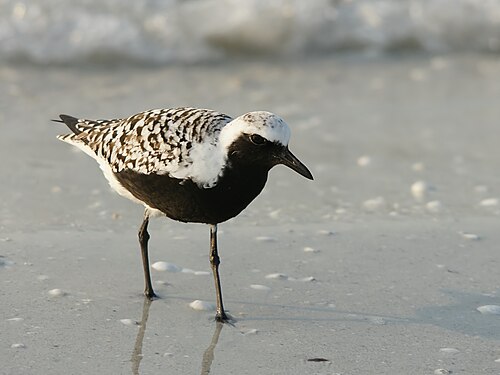
Grey Plover
Pluvialis squatarola (Linnaeus, 1758) — also called Black-bellied Plover, Black Bellied Plover, Black-bellied Plover / Gray Plover. Occurrence records of the Grey Plover are shared on GBIF from around 16 parks and reserves in the directory, most of all Langebaan Lagoon Marine Protected Area (1 321 records), in 3 provinces.
IUCN: VulnerableCharadriidae
16reserves with records
3 883records around them
3provinces
VUIUCN category
Where it is recorded
| Reserve | Province | Records |
|---|---|---|
| Langebaan Lagoon Marine Protected AreaMarine protected area | WC Western Cape | 1 321 |
| West Coast National ParkNational park | WC Western Cape | 1 229 |
| De Mond Nature ReserveNature reserve | WC Western Cape | 426 |
| Pauline Bohnen Nature ReserveNature reserve | WC Western Cape | 225 |
| Steenbok Nature ReserveNature reserve | WC Western Cape | 172 |
| Cape Recife Nature ReserveNature reserve | EC Eastern Cape | 150 |
| Featherbed Nature ReserveNature reserve | WC Western Cape | 101 |
| Stilbaai Marine Protected AreaMarine protected area | WC Western Cape | 68 |
| Kabeljous Nature ReserveNature reserve | EC Eastern Cape | 54 |
| Sixteen Mile Beach Marine Protected AreaMarine protected area | WC Western Cape | 40 |
| Morris point / Uitkyk puntNature reserve | WC Western Cape | 33 |
| Fort D' Acre ReserveNature reserve | EC Eastern Cape | 32 |
| Walker Bay Whale SanctuaryMarine protected area | WC Western Cape | 17 |
| Kowie Local Authority Nature ReserveNature reserve | EC Eastern Cape | 9 |
| Namaqua National Park Marine Protected AreaMarine protected area | NC Northern Cape | 4 |
| Cape Columbine Nature ReserveNature reserve | WC Western Cape | 2 |
By province
- Western Cape
- 11 reserves
- Eastern Cape
- 4 reserves
- Northern Cape
- 1 reserve
Taxonomy
- Class
- Aves
- Order
- Charadriiformes
- Family
- Charadriidae
- Scientific name
- Pluvialis squatarola
- GBIF taxon
- 2480327
- Wikidata
- Q18835
Source: GBIF.org occurrence records within the radius of each reserve's point; taxonomy and IUCN category from the GBIF backbone; photo from Wikimedia Commons, credit on the picture. Records near a reserve do not prove the species lives inside it.