bird · Passeriformes · Campephagidae
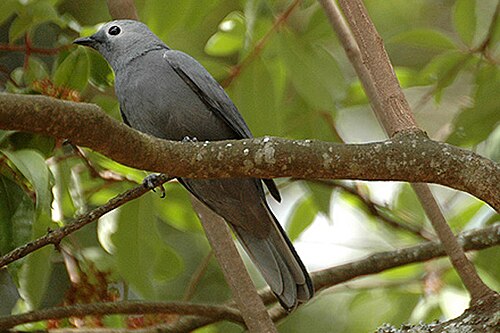
Grey Cuckooshrike
Coracina caesia (Lichtenstein, 1823) — also called Gray Cuckooshrike, Grey Cuckoo-shrike. Occurrence records of the Grey Cuckooshrike are shared on GBIF from around 18 parks and reserves in the directory, most of all Woodbush Forest Reserve (261 records), in 5 provinces.
IUCN: Least concern
18reserves with records
978records around them
5provinces
LCIUCN category
Where it is recorded
| Reserve | Province | Records |
|---|---|---|
| Woodbush Forest ReserveNature reserve | LP Limpopo | 261 |
| Oribi GorgeProtected area | KZN KwaZulu-Natal | 219 |
| Barberton Nature ReserveNature reserve | MP Mpumalanga | 117 |
| Impeleshu Forest ReserveNature reserve | KZN KwaZulu-Natal | 100 |
| Ratombo Nature ReserveNature reserve | LP Limpopo | 59 |
| SANP Garden Of EdenNature reserve | WC Western Cape | 47 |
| Jubilee Creek Picnic SiteNature reserve | WC Western Cape | 38 |
| Dumaneni ReserveNature reserve | MP Mpumalanga | 36 |
| Boosmansbos Wilderness AreaProtected area | WC Western Cape | 22 |
| Knysna Elephant ParkWildlife sanctuary | WC Western Cape | 20 |
| Lekgalameetse Provincial ParkWildlife sanctuary | LP Limpopo | 16 |
| Plaatbos Nature ReserveForest reserve | EC Eastern Cape | 15 |
| Umtamvuna Nature ReserveProtected area | KZN KwaZulu-Natal | 10 |
| Enseleni Nature ReserveNature reserve | KZN KwaZulu-Natal | 5 |
| Mac-Mac Forest Nature ReserveForest reserve | MP Mpumalanga | 4 |
| Ruitersbos Nature ReserveNature reserve | WC Western Cape | 4 |
| Island Nature ReserveNature reserve | EC Eastern Cape | 3 |
| Simbonga Game Reserve and SanctuaryWildlife sanctuary | EC Eastern Cape | 2 |
By province
- Western Cape
- 5 reserves
- KwaZulu-Natal
- 4 reserves
- Eastern Cape
- 3 reserves
- Mpumalanga
- 3 reserves
- Limpopo
- 3 reserves
Taxonomy
- Class
- Aves
- Order
- Passeriformes
- Family
- Campephagidae
- Scientific name
- Coracina caesia
- GBIF taxon
- 2486771
- Wikidata
- Q869051
Source: GBIF.org occurrence records within the radius of each reserve's point; taxonomy and IUCN category from the GBIF backbone; photo from Wikimedia Commons, credit on the picture. Records near a reserve do not prove the species lives inside it.