bird · Passeriformes · Sturnidae
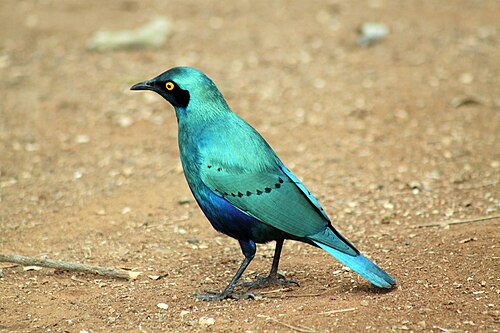
Greater Blue-eared Starling
Lamprotornis chalybaeus Hemprich & Ehrenberg, 1828 — also called Greater Blue-eared Glossy Starling, Greater Blue-eared Glossy-Starling, GBES. Occurrence records of the Greater Blue-eared Starling are shared on GBIF from around 19 parks and reserves in the directory, most of all Kruger National Park (2 895 records), in 2 provinces.
IUCN: Least concernSturnidae
19reserves with records
4 460records around them
2provinces
LCIUCN category
Where it is recorded
| Reserve | Province | Records |
|---|---|---|
| Kruger National ParkNational park | LP Limpopo | 2 895 |
| Lion Sands Game ReservePrivate game reserve | MP Mpumalanga | 546 |
| SabieparkNature reserve | MP Mpumalanga | 256 |
| Mjejane Private Game ReserveNature reserve | MP Mpumalanga | 186 |
| Idube Game ReservePrivate game reserve | MP Mpumalanga | 105 |
| Mala Mala Game ReserveGame reserve | MP Mpumalanga | 99 |
| Thornybush Game ReserveGame reserve | LP Limpopo | 90 |
| Timbavati Game ReserveGame reserve | MP Mpumalanga | 76 |
| Londolozi Game ReservePrivate game reserve | MP Mpumalanga | 53 |
| Klaserie Game ReserveGame reserve | MP Mpumalanga | 44 |
| Sabi Sands Game ReserveNature reserve | MP Mpumalanga | 37 |
| Shaws GateNature reserve | MP Mpumalanga | 28 |
| Tshukudu Private Game ReserveGame reserve | LP Limpopo | 15 |
| Manyeleti Game ReservePrivate game reserve | MP Mpumalanga | 12 |
| Cronje en Dogters Privaat NatuurreserweNature reserve | MP Mpumalanga | 5 |
| Mthethomusha Game ReserveGame reserve | MP Mpumalanga | 5 |
| Grietjie Private Nature ReservePrivate game reserve | LP Limpopo | 4 |
| Langjan Natuur ReservattNature reserve | LP Limpopo | 2 |
| Hans Merensky WildernessProtected area | LP Limpopo | 2 |
By province
- Mpumalanga
- 13 reserves
- Limpopo
- 6 reserves
Taxonomy
- Class
- Aves
- Order
- Passeriformes
- Family
- Sturnidae
- Scientific name
- Lamprotornis chalybaeus
- GBIF taxon
- 2489071
- Wikidata
- Q240445
Source: GBIF.org occurrence records within the radius of each reserve's point; taxonomy and IUCN category from the GBIF backbone; photo from Wikimedia Commons, credit on the picture. Records near a reserve do not prove the species lives inside it.