mammal · Artiodactyla · Bovidae
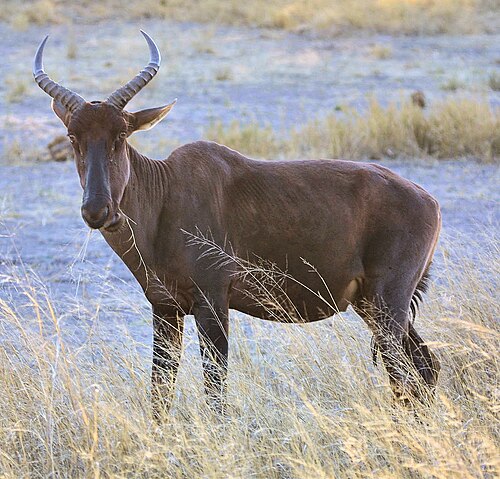
Common Tsessebe
Damaliscus lunatus (Burchell, 1823) — also called Western Tsessebe, Tiang, Tsessebe. Occurrence records of the Common Tsessebe are shared on GBIF from around 17 parks and reserves in the directory, most of all Pilanesberg National Park (116 records), in 5 provinces.
IUCN: Least concernBovidae
17reserves with records
290records around them
5provinces
LCIUCN category
Where it is recorded
| Reserve | Province | Records |
|---|---|---|
| Pilanesberg National ParkGame reserve | NW North West | 116 |
| Kruger National ParkNational park | LP Limpopo | 41 |
| Nylsvley Nature ReserveNature reserve | LP Limpopo | 24 |
| Pilanesberg Private LodgeNature reserve | NW North West | 21 |
| Mokala National ParkNational park | NC Northern Cape | 17 |
| Ithala Game ReserveNature reserve | KZN KwaZulu-Natal | 15 |
| Saint Lucia ParkNature reserve | KZN KwaZulu-Natal | 14 |
| iSimangaliso Wetland ParkProtected area | KZN KwaZulu-Natal | 9 |
| McGregor Private Nature ReserveNature reserve | NW North West | 8 |
| Lapalala WildernessGame reserve | LP Limpopo | 7 |
| Tswalu Kalahari ReserveGame reserve | NC Northern Cape | 5 |
| Waterberg BiosphereBiosphere reserve | LP Limpopo | 3 |
| KleinfonteinGame reserve | LP Limpopo | 2 |
| Mabula Game ReserveProtected area | LP Limpopo | 2 |
| Free State National Botanical GardenBotanical garden | FS Free State | 2 |
| 9 Highlands WildernessNature reserve | LP Limpopo | 2 |
| 56 Highlands WildernessNature reserve | LP Limpopo | 2 |
More of the Bovidae family
ImpalaBushbuckBlue WildebeestBontebokGreater KuduBush DuikerNyalaCommon ElandWaterbuckAfrican BuffaloSpringbokKlipspringerRed HartebeestSteenbokSouthern ReedbuckCape GrysbokGemsbokBlack WildebeestVaal RhebokSable AntelopeMountain ReedbuckRed DuikerBlue DuikerHartebeestOribiRoan AntelopeSharpe's GrysbokSuniHimalayan Tahr
Source: GBIF.org occurrence records within the radius of each reserve's point; taxonomy and IUCN category from the GBIF backbone; photo from Wikimedia Commons, credit on the picture. Records near a reserve do not prove the species lives inside it.