- Parkveld
- Wildlife
- Bathyergidae
- Cape Mole-rat
mammal · Rodentia · Bathyergidae
Cape Mole-rat
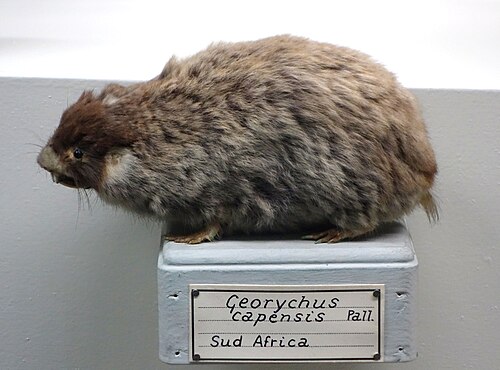
Georychus capensis (Pallas, 1778) — also called Cape Blesmol, Cape Mole Rat. Occurrence records of the Cape Mole-rat are shared on GBIF from around 20 parks and reserves in the directory, most of all Tokai Park (19 records), in 2 provinces.
IUCN: Least concernBathyergidae
20reserves with records
92records around them
2provinces
LCIUCN category
Where it is recorded
| Reserve | Province | Records |
|---|---|---|
| Tokai ParkNational park | WC Western Cape | 19 |
| Jan Marias Nature ReserveNature reserve | WC Western Cape | 11 |
| Table Mountain National ParkNational park | WC Western Cape | 9 |
| Raapenberg Bird SanctuaryGame reserve | WC Western Cape | 8 |
| Lion's Head Hiking TrailNature reserve | WC Western Cape | 6 |
| Greyton Nature ReserveNature reserve | WC Western Cape | 4 |
| Constantia NekNature reserve | WC Western Cape | 4 |
| Rondevlei Nature ReserveProtected area | WC Western Cape | 3 |
| Phillipskop Mountain ReserveNature reserve | WC Western Cape | 3 |
| False Bay Nature ReserveNature reserve | WC Western Cape | 3 |
| Hottentots-HollandProtected area | WC Western Cape | 3 |
| Clara Anna Fontein Game ReservePrivate game reserve | WC Western Cape | 3 |
| Stony Point Nature ReserveNature reserve | WC Western Cape | 2 |
| Stony Point Penguin ColonyNature reserve | WC Western Cape | 2 |
| Table Mountain National Park Marine Protected AreaMarine protected area | WC Western Cape | 2 |
| Boulders Penguin ColonyGame reserve | WC Western Cape | 2 |
| Betty's Bay Marine Protected AreaMarine protected area | WC Western Cape | 2 |
| Lower Guinea-Fowl TrailNature reserve | EC Eastern Cape | 2 |
| Wellington ParkNature reserve | EC Eastern Cape | 2 |
| Settlers Park Nature ReserveNature reserve | EC Eastern Cape | 2 |
By province
- Western Cape
- 17 reserves
- Eastern Cape
- 3 reserves
Taxonomy
- Class
- Mammalia
- Order
- Rodentia
- Family
- Bathyergidae
- Scientific name
- Georychus capensis
- GBIF taxon
- 5219653
- Wikidata
- Q301528
More of the Bathyergidae family
Source: GBIF.org occurrence records within the radius of each reserve's point; taxonomy and IUCN category from the GBIF backbone; photo from Wikimedia Commons, credit on the picture. Records near a reserve do not prove the species lives inside it.