mammal · Rodentia · Muridae
Bush Karroo Rat
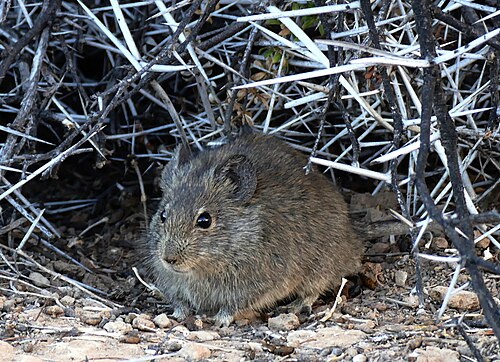
Myotomys unisulcatus (F.Cuvier, 1829) — also called Bush Vlei Rat. Occurrence records of the Bush Karroo Rat are shared on GBIF from around 14 parks and reserves in the directory, most of all Addo Elephant National Park (29 records), in 3 provinces.
IUCN: Least concernMuridae
14reserves with records
79records around them
3provinces
LCIUCN category
Where it is recorded
| Reserve | Province | Records |
|---|---|---|
| Addo Elephant National ParkNational park | EC Eastern Cape | 29 |
| Nyati ConcessionProtected area | EC Eastern Cape | 15 |
| Paternoster MiddenProtected heritage site | WC Western Cape | 5 |
| Postberg Nature ReserveNature reserve | WC Western Cape | 4 |
| Lambert’s Bay Bird Island Nature ReserveGame reserve | WC Western Cape | 4 |
| Rocherpan Marine Protected AreaMarine protected area | WC Western Cape | 3 |
| Cape Columbine Nature ReserveNature reserve | WC Western Cape | 3 |
| Mountain Zebra National ParkNational park | EC Eastern Cape | 3 |
| Blaauwberg Conservation AreaNature reserve | WC Western Cape | 3 |
| Vrolijkheid Nature ReserveNature reserve | WC Western Cape | 2 |
| Goegap Nature ReserveNature reserve | NC Northern Cape | 2 |
| West Coast National ParkNational park | WC Western Cape | 2 |
| The Koppie Nature ReserveNature reserve | NC Northern Cape | 2 |
| Langebaan Lagoon Marine Protected AreaMarine protected area | WC Western Cape | 2 |
More of the Muridae family
Xeric Four-striped Grass RatSouthern African Vlei RatNamaqua MicaelamysSouthern African Pygmy MouseCape Short-tailed GerbilSingle-Striped LemniscomysCommon GrammomysPaeba Hairy-footed GerbilRed Veld AethomysNatal MastomysMesic Four-striped Grass RatSouthern African MastomysAngoni Vlei RatSouthern African Spiny MouseBlack-tailed ThallomysSouth East African Vlei Rat
Source: GBIF.org occurrence records within the radius of each reserve's point; taxonomy and IUCN category from the GBIF backbone; photo from Wikimedia Commons, credit on the picture. Records near a reserve do not prove the species lives inside it.