- Parkveld
- Wildlife
- Accipitridae
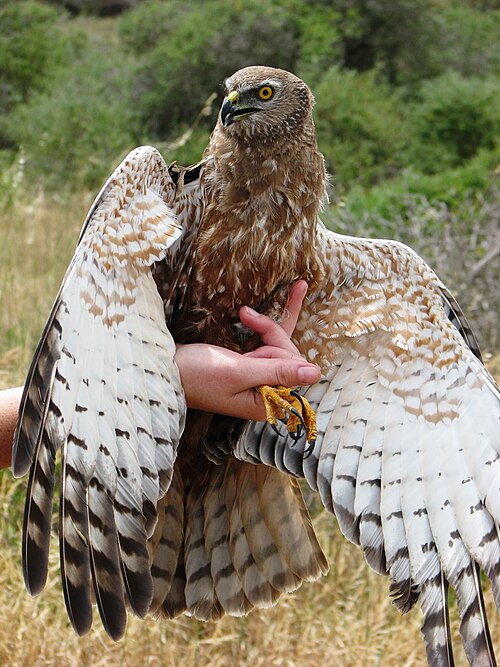
- African Marsh Harrier
bird · Accipitriformes · Accipitridae
African Marsh Harrier
Circus ranivorus (Daudin, 1800) — also called African Marsh-Harrier, AMHA, African marsh-harrier. Occurrence records of the African Marsh Harrier are shared on GBIF from around 18 parks and reserves in the directory, most of all False Bay Nature Reserve (2 060 records), in 4 provinces.
IUCN: Least concernAccipitridae
18reserves with records
3 429records around them
4provinces
LCIUCN category
Where it is recorded
| Reserve | Province | Records |
|---|---|---|
| False Bay Nature ReserveNature reserve | WC Western Cape | 2 060 |
| Marievale Bird SanctuaryGame reserve | GP Gauteng | 499 |
| Rondevlei Nature ReserveProtected area | WC Western Cape | 295 |
| Ingula Nature ReserveNature reserve | KZN KwaZulu-Natal | 140 |
| Himeville Nature ReserveNature reserve | KZN KwaZulu-Natal | 111 |
| Karkloof Conservation CentreWildlife sanctuary | KZN KwaZulu-Natal | 70 |
| Ntsikeni Nature ReserveGame reserve | KZN KwaZulu-Natal | 53 |
| Zeekoevlei Nature ReserveNature reserve | WC Western Cape | 50 |
| Goukamma Nature ReserveNature reserve | WC Western Cape | 32 |
| Cape Recife Nature ReserveNature reserve | EC Eastern Cape | 28 |
| St. Lucia Marine ReserveMarine protected area | KZN KwaZulu-Natal | 27 |
| Walker Bay Nature ReserveNature reserve | WC Western Cape | 16 |
| Eastern Shores State ForestForest reserve | KZN KwaZulu-Natal | 14 |
| Umvoti Vlei Nature ReserveNature reserve | KZN KwaZulu-Natal | 10 |
| Coleford Nature ReserveNature reserve | KZN KwaZulu-Natal | 8 |
| Mkhambathi Nature ReserveNature reserve | EC Eastern Cape | 8 |
| Panthera Africa Big Cat SanctuaryWildlife sanctuary | WC Western Cape | 6 |
| Rondeberg Private Nature ReserveNature reserve | WC Western Cape | 2 |
By province
- KwaZulu-Natal
- 8 reserves
- Western Cape
- 7 reserves
- Eastern Cape
- 2 reserves
- Gauteng
- 1 reserve
Taxonomy
- Class
- Aves
- Order
- Accipitriformes
- Family
- Accipitridae
- Scientific name
- Circus ranivorus
- GBIF taxon
- 5229173
- Wikidata
- Q17556
More of the Accipitridae family
Black-winged KiteAfrican Fish EagleJackal BuzzardBlack KiteLong-crested EagleAfrican Harrier-HawkCape VultureCommon BuzzardYellow-billed KiteWhite-backed VulturePale Chanting GoshawkVerreaux's EagleBateleurBrown Snake EagleCrowned EagleWahlberg's EagleBlack HarrierBooted EagleTawny EagleBlack-chested Snake EagleMartial EagleForest BuzzardAfrican Hawk-EagleHooded VultureAfrican GoshawkDark Chanting GoshawkBlack SparrowhawkBearded VultureRufous-breasted SparrowhawkGabar GoshawkPalm-nut VultureSouthern Banded Snake EagleLizard BuzzardLittle SparrowhawkOvambo SparrowhawkAfrican Cuckoo-HawkLesser Spotted Eagle
Source: GBIF.org occurrence records within the radius of each reserve's point; taxonomy and IUCN category from the GBIF backbone; photo from Wikimedia Commons, credit on the picture. Records near a reserve do not prove the species lives inside it.